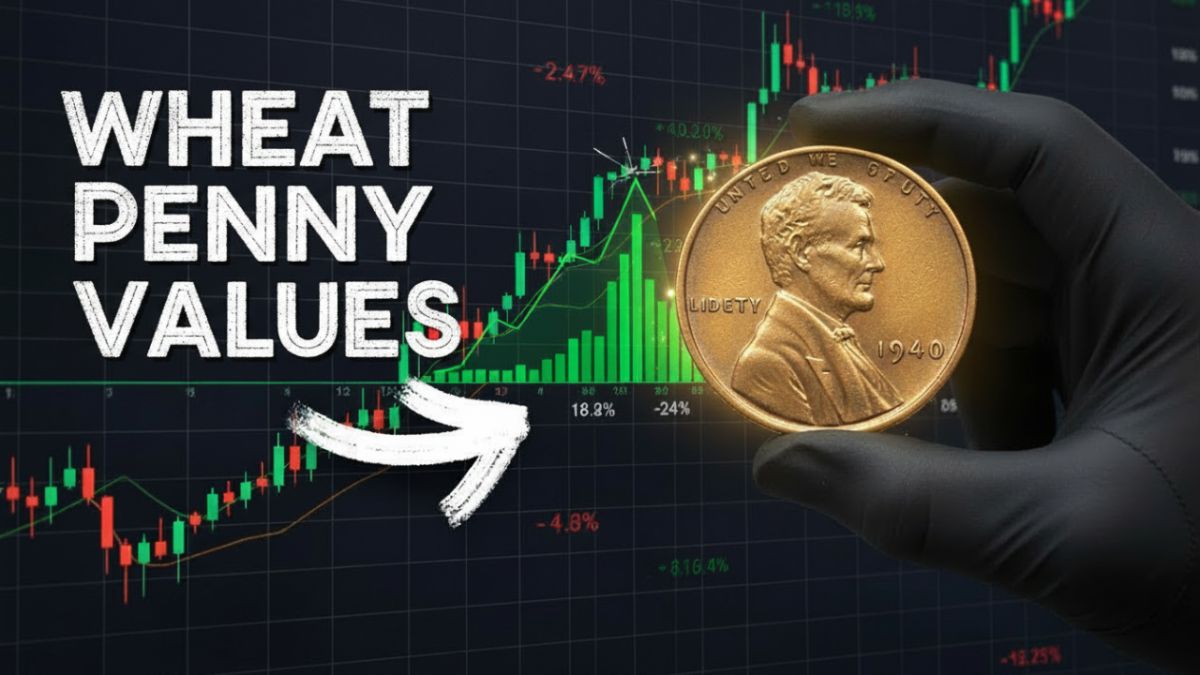
Wheat pennies minted between 1920 and 1945 are some of the most collected U.S. coins due to their age, availability, and surprising value in rare cases. While many are worth just a few cents, certain mint years and errors can be worth hundreds or even thousands of dollars. This guide breaks down the full value chart, rare coins, prices by year, and what makes this era of Wheat Pennies highly collectible.
Why 1920–1945 Wheat Pennies Are Valuable
Wheat pennies from this period are important because they include low-mintage years, rare mint errors, and coins from the Great Depression and World War II. These historical phases produced unique minting conditions, making some pennies far more valuable than others.
Collectors look closely at mint marks, metal composition, and condition, all of which impact a penny’s price dramatically.

Rare Wheat Pennies From 1920–1945 to Watch For
Before the full value chart, here’s one essential rare find:
• The 1922 “No D” error penny can be worth thousands because a worn die caused the Denver mint mark to disappear.
This single coin is one of the most desirable Wheat Pennies ever minted.

1920–1945 Wheat Penny Value Chart (Year-by-Year Prices)
Values listed are approximate ranges for circulated coins. Uncirculated or professionally graded pieces can be worth significantly more.
| Year | Mint Mark | Common Value | Notes |
|---|---|---|---|
| 1920 | No mint, D, S | $0.20–$3 | S mint brings higher value |
| 1921 | No mint, S | $0.50–$15 | Low mintage |
| 1922 | D / No D Error | $15–$3,000+ | Extremely rare No D version |
| 1923 | No mint, S | $0.50–$8 | S mint scarcer |
| 1924 | No mint, D, S | $0.30–$20 | 1924 D is semi-key |
| 1925 | No mint, D, S | $0.20–$5 | Common except 1925 S |
| 1926 | No mint, D, S | $0.20–$4 | Normal availability |
| 1927 | No mint, D, S | $0.20–$5 | Small premium for S mint |
| 1928 | No mint, D, S | $0.20–$6 | S mint more desirable |
| 1929 | No mint, D, S | $0.15–$4 | Common date |
| 1930 | No mint, D, S | $0.15–$6 | 1930 S slightly higher |
| 1931 | No mint, S | $1–$80 | 1931 S is a key date |
| 1932 | No mint | $0.10–$1 | Only minted in Philadelphia |
| 1933 | No mint | $0.20–$3 | Scarce year |
| 1934 | No mint, D | $0.15–$4 | Common |
| 1935 | No mint, D, S | $0.10–$3 | Most circulated |
| 1936 | No mint, D, S | $0.10–$3 | Look for doubling errors |
| 1937 | No mint, D, S | $0.10–$3 | Widespread availability |
| 1938 | No mint, D, S | $0.15–$3 | Common |
| 1939 | No mint, D, S | $0.10–$3 | Many survived |
| 1940 | No mint, D, S | $0.10–$3 | Very common |
| 1941 | No mint, D, S | $0.10–$3 | Look for doubled die errors |
| 1942 | No mint, D, S | $0.10–$3 | Pre-steel penny |
| 1943 | Steel only | $0.20–$2 | Except the extremely rare bronze error |
| 1944 | No mint, D, S | $0.10–$3 | Bronze returned after steel |
| 1945 | No mint, D, S | $0.10–$3 | Final wartime wheat issue |
Note: Prices rise significantly (sometimes 10×–500×) for MS60+ graded coins.
Most Valuable Wheat Pennies of This Era
Several coins in the 1920–1945 window can reach sky-high values:

- 1922 No D Penny – One of the rarest mint errors, worth thousands in almost any grade.
- 1931 S Wheat Penny – Very low mintage; collectors always seek this key date.
Collectors should also check for doubling errors in 1936 and 1941 pennies, which can raise their value dramatically.
How to Identify a Rare or Valuable Wheat Penny
To determine whether your penny is valuable:
- Check the year and mint mark – Certain combinations are extremely rare.
- Examine for mint errors – Missing letters, doubling, off-centering, or unusual metal.
- Assess condition – Sharp details, clean surfaces, and minimal wear increase value.
Even worn coins can be worth more than face value if they are scarce dates.
Conclusion:
Wheat pennies from 1920 to 1945 are highly collectible and full of hidden gems. While many are common, several years and mint errors from this era carry impressive value, making it crucial for collectors to inspect coins carefully. Whether you’re new to coin collecting or evaluating an inherited coin jar, knowing what to look for can help you discover rare pieces worth far more than a cent.
Disclaimer: Values listed are approximations and depend heavily on coin condition, grading, and collector demand. Always consult a certified coin grader for exact valuation.