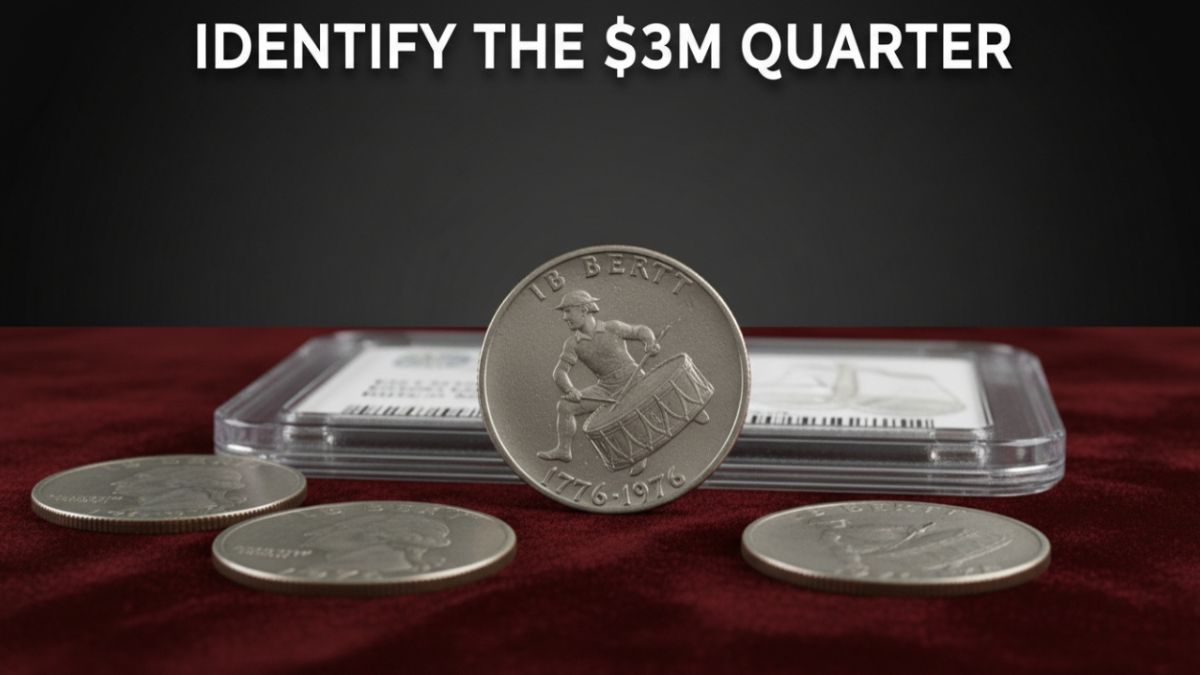
The 1976 Bicentennial Quarter is one of the most iconic US coins ever minted, but a few extremely rare varieties have shocked collectors with valuations reaching up to $3 million. While most Bicentennial quarters are common pocket change, specific minting errors and unique die varieties make a tiny number of them extraordinarily valuable. Here is the complete guide to identifying the rarest versions and what makes them so prized.
Why the 1976 Bicentennial Quarter Is Special
The US Mint released Bicentennial coins in 1975 and 1976 to celebrate America’s 200th anniversary. Instead of the usual eagle reverse, these quarters feature a Colonial drummer with “1776-1976” as the dual date. More than 1.6 billion were minted, but only a very select few contain extraordinary minting characteristics that elevate their value into the millions.
Key Features of the $3 Million Rare Bicentennial Quarter
Collectors track high-value quarters by looking for unusual die errors, special minting compositions, and extremely crisp details. The most valuable example combines multiple rare traits, making it nearly impossible to find but easy to identify if you know what to look for.

• Double-die obverse or reverse (strong doubled lettering)
• Off-center strike or misaligned die
• Silver composition on coins that should be clad
• Proof-quality sharpness on circulation pieces
• Extremely high-grade condition near mint state
How to Identify the Rarest Bicentennial Quarter Variety
Below is a simple table showing the traits that separate a normal coin from a potentially million-dollar piece.
| Feature Type | Common Coin | Rare Multi-Error Variety |
|---|---|---|
| Mint Composition | Clad copper-nickel | Accidental 40 percent silver strike |
| Strike Quality | Standard | Ultra-sharp proof-like details |
| Error Type | None or minor | Double-die, off-center, broad strike combo |
| Condition | Circulated | Near perfect MS68 or higher |
| Market Value | Face value to $50 | Up to $3 million |
If your quarter matches more than one of the rare traits, its value rises exponentially.

Where the $3 Million Valuation Comes From
High-grade Bicentennial quarters with multiple errors have sold for astonishing amounts in private auctions due to:
• Rarity so extreme that only a handful are known
• Collector demand for American historical coins
• Combination of mint errors on a single specimen
• Exceptional grading by professional services
Coin collectors consider the multi-error silver strike Bicentennial quarter one of the ultimate US coin treasures.

Tips to Check Your Bicentennial Quarter at Home
Even without special tools, you can quickly examine your coin:
• Look closely at “IN GOD WE TRUST” and the date for doubling
• Examine the drummer’s details for sharpness or distortion
• Check the coin’s edge for silver coloring rather than copper
• Compare the strike with any regular 1976 quarter
• Inspect alignment — a sideways, shifted, or expanded rim may indicate an error
A magnifying glass or smartphone zoom can reveal details that determine major value differences.

Conclusion:
The 1976 Bicentennial Quarter remains a beloved collectible, but only a rare few contain the extraordinary combination of errors and silver composition that push valuations into the $3 million range. By learning the key identifying features, collectors and everyday coin holders alike can better evaluate whether they possess a genuine rarity. Always handle potential high-value coins carefully and consider expert grading to confirm authenticity.
Disclaimer: This article provides general information for collectors. Coin values vary widely based on grading, condition, rarity, and market demand. Only professional evaluation can determine an official value.