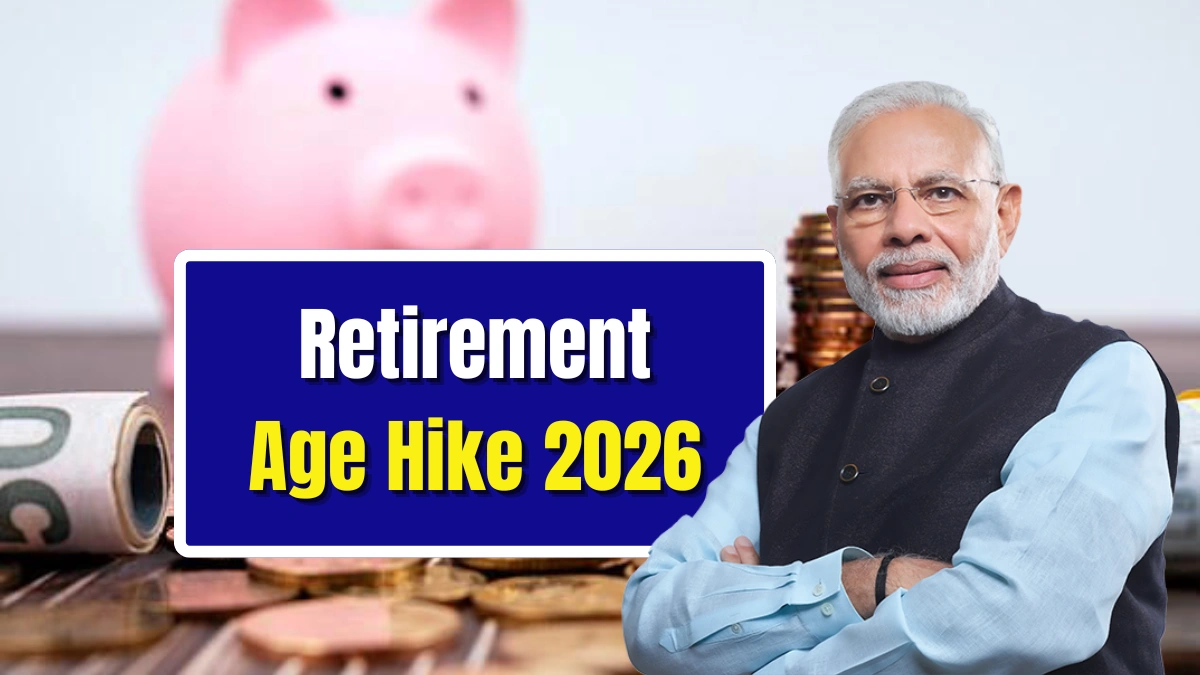
Retirement Age Hike 2026: The Indian government is considering raising the retirement age from 60 to 62 years as part of proposed labor reforms in 2026. This potential change aims to address increasing life expectancy, strengthen workforce participation, and improve the sustainability of pension and social security systems. Employees, employers, and policymakers are closely watching the proposal, as it could have wide-ranging effects on career planning, pensions, and labor market dynamics.
Proposed Change in Retirement Age
Currently, the standard retirement age in many government and private sectors is 60 years. The government is evaluating a proposal to extend this age limit to 62 years. The objective is to retain experienced employees for longer, reduce the financial strain on pension schemes, and ensure that workers continue contributing to social security systems while benefiting from extended employment.

Rationale Behind the Proposal
Raising the retirement age is being considered in light of increasing life expectancy and healthier aging populations. Extending the working period allows individuals to accumulate more savings, improve pension benefits, and maintain financial independence. For employers, retaining skilled and experienced staff can improve productivity and reduce the costs associated with hiring and training new employees.
Impact on Employees and Pensions
A shift in retirement age will affect employees’ career planning, pension accruals, and retirement benefits. Workers could see higher accumulated pension contributions and larger retirement funds due to two additional years of employment. However, it may also require adjustments in workforce planning and succession management within organizations.

Sector-Wise Considerations
The government is likely to implement the change gradually, taking into account sector-specific factors. While white-collar and administrative roles may smoothly adapt to the higher retirement age, labor-intensive jobs may require special provisions or exemptions to ensure employee health and safety are not compromised.
Potential Effects of Retirement Age Increase
| Category | Current Age | Proposed Age | Possible Impact |
|---|---|---|---|
| Government Employees | 60 | 62 | Increased pension accumulation, delayed post-retirement benefits |
| Private Sector Staff | 60 | 62 | Longer tenure, more experience retained, workforce adjustments needed |
| Pension Funds | N/A | N/A | Enhanced sustainability due to extended contributions |
Next Steps and Government Notifications
The government is expected to issue detailed notifications and guidelines if the proposal is approved. Public and employee feedback may be sought before finalizing the policy. Employers will also receive instructions on implementing changes in retirement planning and HR policies.

Conclusion: Raising the retirement age from 60 to 62 years could significantly impact workforce dynamics, pensions, and employee financial planning. While it offers benefits such as higher pension savings and extended workforce experience, it also requires careful implementation across sectors. Employees and employers should stay informed about official notifications and prepare for upcoming adjustments.
Disclaimer: This article is for informational purposes only and does not constitute legal, financial, or employment advice. Readers should consult official government notifications and HR authorities for verified details regarding retirement age policies, implementation timelines, and sector-specific rules.