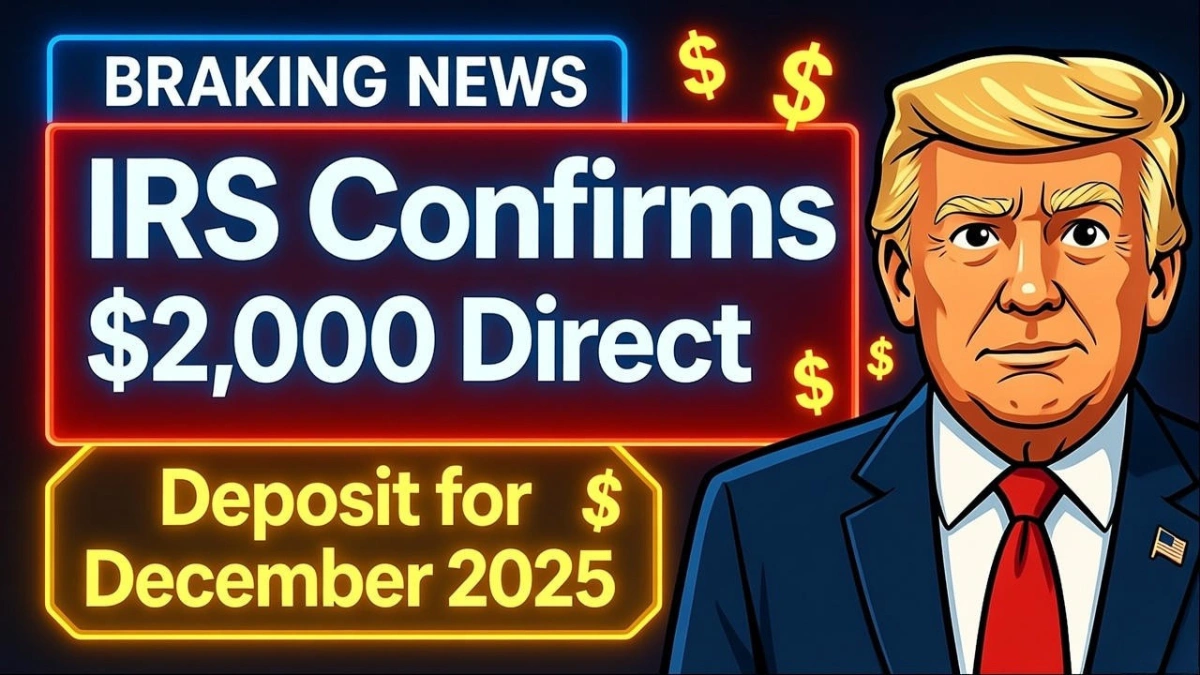
As the year draws to a close, rumors about a $2,000 IRS direct deposit for taxpayers are circulating widely online. Screenshots, viral posts, and forwarded messages claim that eligible Americans will automatically receive $2,000 in additional support before year’s end. Amid rising living costs and year-end financial planning, it’s natural to wonder what’s real and what’s speculation. Separating verified IRS programs from misinformation can help you plan your taxes and finances with confidence rather than confusion.
What the Viral $2,000 Claims Say
The popular versions of the claim suggest that the IRS will send a one-time $2,000 direct deposit to taxpayers in year-end payments without further action required. Some posts frame this as a new tax rebate, emergency benefit, or leftover funds that must be claimed quickly. These messages often include urgent language and unofficial graphics to make them appear more legitimate. While the intent behind some posts may be benign, unverified claims often spread faster than official announcements.
How IRS Payments and Credits Actually Work
The Internal Revenue Service distributes money to taxpayers based on specific tax rules, eligibility criteria, and filing activity. Well-known payments include tax refunds after filing returns and refundable tax credits such as the Earned Income Tax Credit (EITC) and Child Tax Credit (CTC). These payments are tied to individual tax returns, income levels, family status, dependents, and documented eligibility.

The IRS does not currently have an announced program for a universal $2,000 direct deposit simply issued to all taxpayers. Official payments require proper filing of your tax return and meet defined eligibility criteria based on federal tax law.
Fact Check on the $2,000 Year-End Deposit
| Viral Claim Feature | What the Rumors Say | Official IRS Process |
|---|---|---|
| Direct $2,000 deposit for all taxpayers | Yes | No officially announced universal payment |
| Automatic deposit without filing taxes | Implied in rumors | Payments generally follow tax filings or verified qualifying events |
| New year-end rebate for 2025/2026 | Frequently claimed | No confirmed year-end rebate program |
| Refunds based on eligibility | Often misinterpreted | Refunds depend on individual tax filings |
| Notices through social media | Implied | IRS uses mail and secure online accounts |
This table highlights the key differences between viral narratives and established IRS procedures.
Legitimate IRS Payments That May Be Confused With Rumors
While there is no universal $2,000 payment announced, there are legitimate IRS payments that taxpayers may receive if they qualify:

Tax refunds after filing your tax return can vary widely in amount depending on your tax situation.
Refundable tax credits like the EITC or CTC may increase your refund if you qualify and accurately report income and dependents.
Adjusted payments may result when you have overpaid taxes or qualify for specific federal tax incentives.
These amounts differ by individual and are not guaranteed as flat deposits for all taxpayers.
Why This Type of Rumor Spreads Quickly
Rumors about big “free” payments tap into emotional triggers like financial stress, hope for extra income, and fear of missing out on benefits. Posts that promise guaranteed money with minimal effort are more likely to be shared, even without verification. Additionally, fabricated IRS logos, fake screenshots, or misleading language can create false impressions of legitimacy.

Recognizing how viral content is designed to attract attention can help you stay aware and avoid misinformation.
How to Verify Real IRS Payments
The IRS provides official information through its website and secure taxpayer accounts. After you file your tax return, you can track your refund or credit status using IRS tools. Legitimate IRS communications arrive by mail or through secure online portals, not through random social media forwards.
Before acting on any claim about government payments, confirm the details with official IRS sources or a qualified tax professional.

Common Red Flags in Viral Payment Claims
Rumors often include one or more of these warning signs:
- Assertions of guaranteed payments to all taxpayers
- Claims that no tax filing is required
- Statements originating only from social posts rather than official sources
- Urgent language prompting you to share or click links
Identifying these red flags helps protect you from misinformation and potential scams.
Conclusion: While the idea of a $2,000 IRS direct deposit is compelling, no official IRS announcement currently supports a universal year-end payment of this type. Taxpayers may receive legitimate refunds or credits if they qualify based on their individual tax filings and eligibility for refundable credits, but these vary from person to person. Staying informed through authoritative IRS sources and understanding how tax refunds and credits work can help you navigate year-end financial planning with clarity and confidence.

Disclaimer: This article is provided for informational purposes only and should not be interpreted as tax, legal, or financial advice or as an official statement from the Internal Revenue Service. Information about IRS payments, refunds, credits, deadlines, and eligibility criteria is subject to change based on federal tax law and IRS policy updates.