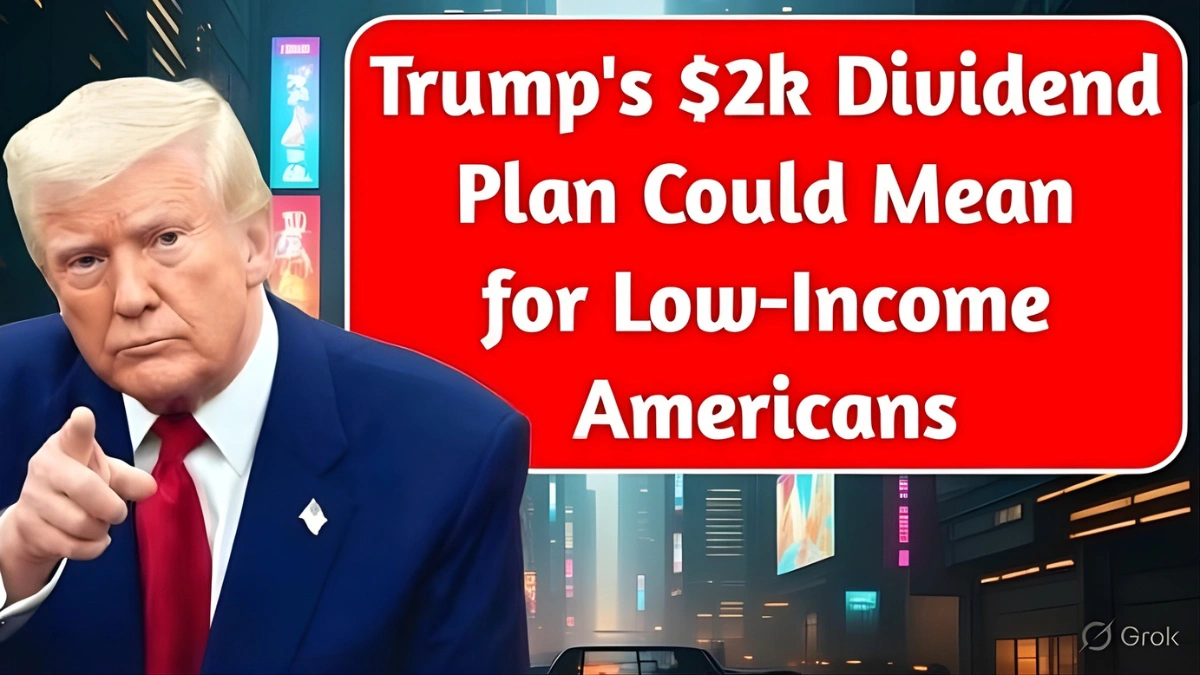
A new economic idea gaining traction in national discussion is Donald Trump’s proposed $2,000 “dividend plan,” a concept tied to using federal revenue—particularly from tariffs—to provide direct financial benefits to American households. Although not an approved program, the proposal is shaping conversations about how future administrations might support low-income and middle-income families. Here is what the plan could look like, who might benefit and how likely it is to become reality.
What Is Trump’s $2K Dividend Plan?
The proposal suggests that revenue generated from increased tariffs on imported goods could be redistributed to American households in the form of annual or periodic $2,000 dividend-style payments. Trump described the idea as returning money “back to the American people,” especially to working families affected by high costs and foreign competition.
The plan is conceptual, not formal legislation, and no official rules or payment schedules exist.

Why the Plan Targets Low-Income Americans
Supporters argue that low-income households feel the greatest impact from inflation and foreign-market competition. A $2,000 dividend could help:
- Offset rising food, rent and utility costs
- Reduce debt burdens
- Boost local economies in lower-income communities
- Provide financial stability during economic fluctuations
The plan is marketed as a way to share national revenue more equitably.
How the $2,000 Dividend Could Be Funded
The plan’s foundation rests on increasing tariffs on certain imported goods. The federal government would collect revenue from these tariffs, and a portion could be redistributed to citizens. Economists note that revenue would depend on the volume of imports, tariff rates and economic response from trading partners.

Potential Eligibility If the Plan Moves Forward
| Eligibility Factor | Possible Requirement |
|---|---|
| Income Level | Likely targeted toward low- and middle-income earners |
| Residency | Must be a U.S. citizen or legal resident |
| Tax Filing | Payments could be processed through IRS systems |
| Benefit Recipients | SSI, SSDI and VA beneficiaries could be included if income-qualified |
These guidelines are hypothetical and based on similar federal payment structures.
Could Low-Income Americans Really Receive $2,000?
Possibly—but only if Congress approves a detailed version of the plan. Some advisers envision a refundable credit added to tax returns; others describe a separate “national dividend” delivered annually. Whether the payment becomes recurring, one-time or income-adjusted would depend on legislative negotiations.
Concerns and Criticisms
Economic experts warn that tariffs can increase prices for consumers, which may disproportionately affect the very groups the dividend aims to help. They also question whether tariff revenue would remain stable enough to fund recurring payments.

What Happens Next?
The plan has not yet been drafted into law. It will require Congressional approval, budget scoring and economic review. More details may emerge during election debates and policy announcements in 2025 and 2026.
One Quick Takeaway Section
Trump’s proposed $2,000 dividend plan is not approved, but it could deliver meaningful support to low-income Americans if adopted—funded by tariff revenue and delivered through IRS payment systems.
Conclusion: While still a conceptual proposal, Trump’s $2,000 dividend plan has sparked significant public interest by suggesting a new way to provide financial relief to low-income families. Whether the idea becomes policy depends on Congressional action and economic feasibility. For now, the proposal remains an early-stage concept worth monitoring as national economic plans evolve.

Disclaimer: This article summarizes discussions of a policy proposal, not an approved government program. Final eligibility and payment details will depend on future legislation.