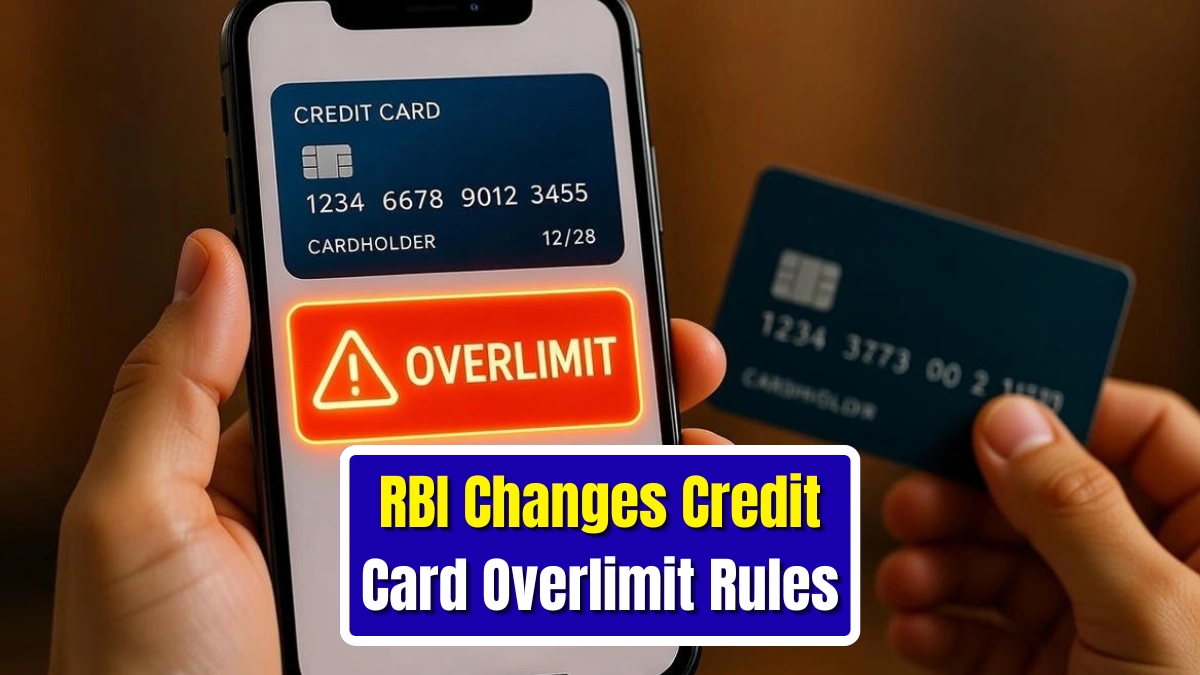
RBI Changes Credit Card Overlimit Rules: In a major relief for credit card users, the Reserve Bank of India (RBI) has introduced new rules that put an end to unexpected overlimit charges. The move is aimed at improving transparency, protecting consumers and ensuring banks cannot levy hidden fees without clear customer consent. Millions of cardholders across India are expected to benefit from this long-awaited change.
What Has RBI Changed in Credit Card Overlimit Rules
Under the new RBI guidelines, banks and card issuers can no longer automatically allow transactions beyond a card’s approved credit limit and then charge overlimit fees without permission. Cardholders must now give explicit consent if they want the overlimit facility enabled. Without consent, transactions that exceed the credit limit must be declined.

Why RBI Introduced This Rule
The RBI received repeated complaints from customers about surprise overlimit charges appearing on monthly statements. Many users were unaware that their banks had allowed spending beyond the limit and later imposed heavy penalties. The new rule ensures customers stay in control of their spending and are not penalized without informed approval.
How the New Overlimit Rule Works
| Scenario | What Happens Now |
|---|---|
| Overlimit consent not given | Transaction beyond limit will be declined |
| Overlimit consent given | Bank may allow transaction with clearly disclosed charges |
| Hidden overlimit fees | Not allowed under RBI rules |
| Consent withdrawal | Customer can disable overlimit anytime |
This ensures full transparency and choice for cardholders.

What Credit Card Users Should Do Now
Cardholders should check their credit card settings through their bank’s app or customer care to see whether the overlimit facility is enabled. If not required, users can keep it disabled and avoid unnecessary charges. Those who occasionally need flexibility can opt in after understanding the applicable fees.
Impact on Banks and Card Issuers
Banks will need to update their systems, customer communication and consent mechanisms. Clear disclosure of charges is mandatory, and silent activation of overlimit facilities is no longer permitted. This change is expected to improve trust between banks and customers.

Does This Affect Credit Scores or Limits
The rule does not change a customer’s approved credit limit or directly impact credit scores. However, preventing accidental overlimit usage can help users avoid penalties and maintain better credit discipline.
One Quick Takeaway Section
RBI’s new rule ensures credit card overlimit charges can only be applied with clear customer consent, ending surprise fees and giving users more control over their spending.

Conclusion: The RBI’s update on credit card overlimit rules is a strong step toward consumer protection and financial transparency. By eliminating surprise charges and enforcing explicit consent, the central bank has empowered cardholders to manage credit more responsibly. Customers are advised to review their card settings to fully benefit from this change.
Disclaimer: This article is based on RBI guidelines and public notifications. Specific implementation details may vary by bank, so customers should confirm terms directly with their card issuer.
